The Clock is Ticking on Your Backyard Fire Pit Project
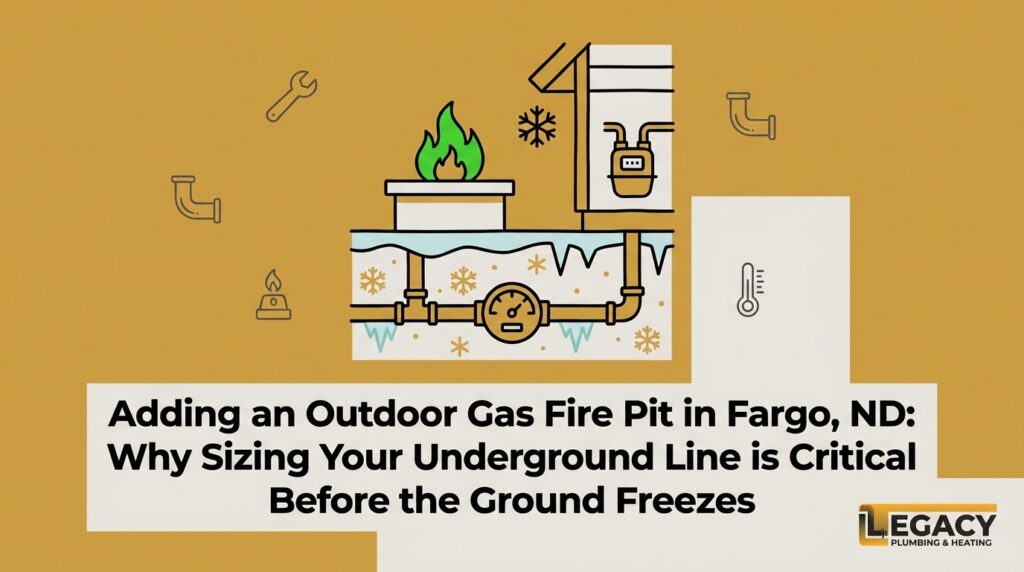
August in North Dakota signals a rapid shift in the weather, making late summer the final practical window for major outdoor plumbing projects. In our years of preparing Fargo homes for the changing seasons, we’ve learned that if you are planning on adding an outdoor gas fire pit in Fargo: why sizing your underground line is critical before the ground freezes is the very first thing you need to understand. A backyard fire pit requires significant planning, specifically regarding your home’s total gas capacity and the impending deep freeze. Delaying this project means risking an incomplete installation once the soil turns to solid ice, leaving your patio torn up until spring. Before the leaves even start to turn, you need a professional assessment to ensure your natural gas line extension is both safe and compliant.
Take action now: Learn more about upgrading to natural gas and schedule your gas line installation before the seasonal window closes.
Understanding Fargo’s Deep Frost Line and Trenching Deadlines
Fargo’s climate forces a strict deadline on any underground construction. As local experts who dig these trenches every year, our team knows that the average first freeze typically arrives between late September and early October, rapidly changing the consistency of the soil. Extreme winter conditions can push the frost depth past 60 inches, turning the ground into a barrier as hard as concrete. Underground trenching becomes nearly impossible—and significantly more disruptive to your landscaping—once the frost line sets in. Scheduling your late summer trenching before frost guarantees your property is ready for autumn fire pit usage without weather-related delays.
The Anatomy of Frozen Ground
Soil moisture and freezing temperatures combine to halt excavation efforts entirely. When the water trapped in the soil freezes, it expands, binding the dirt and rock into an impenetrable layer. Waiting until mid-September is often too late for complex underground projects, as unseasonal early cold snaps can freeze the top layer of topsoil just enough to make trenching equipment ineffective.
| Fargo Trenching Timeline | Soil Condition | Project Feasibility |
|---|---|---|
| August | Soft, dry, optimal for excavation | Ideal window for digging and inspections |
| September | Cooling rapidly, potential early surface frost | High risk of weather delays |
| October – November | Ground freezing solid, frost line dropping | Trenching highly disruptive or impossible |
| December – March | Deep frost line (up to 60+ inches) | Excavation halted until spring thaw |
BTU Demands: Why Your Fire Pit Isn’t Just a Landscaping Feature
Most homeowners view a new fire pit primarily as a landscaping upgrade, but mechanically, it is a massive energy consumer. Outdoor gas fire pits can demand anywhere from 60,000 to over 300,000 BTUs (British Thermal Units) depending on the burner size and flame height. A pattern we see often at Legacy Plumbing & Heating is homeowners overlooking the fact that adding this load can effectively double a standard home’s total natural gas draw. Failing to calculate the total home BTU load before installing your outdoor feature can lead to severe pressure drops across your entire gas system.
The warning signs of poor sizing: If your gas line is undersized, you will notice symptoms like sputtering indoor appliances, inefficient heating from your furnace, water heaters taking longer to recover, and significant safety hazards related to incomplete combustion.
Balancing Indoor and Outdoor Gas Loads
Your water heater, furnace, and gas oven all compete with the new fire pit for gas pressure from the same main source. The existing gas meter on the side of your house has a maximum capacity rating. If your home’s appliances already draw 200,000 BTUs and your meter maxes out at 250,000 BTUs, adding a 150,000 BTU fire pit will overwhelm the system. A professional must evaluate the existing meter and calculate the cumulative draw to determine if a meter upgrade from your utility provider is necessary before the fire pit is even ordered.
The Science of Sizing Your Underground Gas Line
The pipe that carries natural gas from your meter to the fire pit must be meticulously sized based on the laws of physics. Pipe diameter is directly correlated to the distance from the meter to the fire pit. Longer runs require wider pipes to maintain adequate pressure and volume over that distance, combatting natural friction loss. International Fuel Gas Code (IFGC) pipe sizing tables dictate the exact requirements based on the specific BTU load of the appliance and the total length of the run.
For longevity and safety, our team recommends specific grades of high-density polyethylene (HDPE) for underground gas transport because they resist corrosion and can safely flex with minor soil movements.
Distance, Diameter, and Delivery
A pipe size that works perfectly for a patio grill located five feet from the house will fail completely for a high-capacity backyard fire pit located fifty feet away. The mathematical relationship between friction loss inside the pipe walls and the final flame height is absolute. If the pipe is too narrow for the distance, the gas pressure drops too low by the time it reaches the burner, resulting in a weak, yellow, or easily extinguished flame.

Navigating Municipal Building Codes and Trench Depths
Trenching a gas line is heavily regulated to protect property and public safety. Standard residential underground gas lines must typically be buried 18 to 24 inches deep to meet local codes. This depth protects the line from accidental punctures during routine landscaping and shields it from the most aggressive surface temperature fluctuations.
- Utility locating: Professional teams handle the mandatory 811 utility locating process to ensure no existing water, sewer, or electrical lines are struck during excavation.
- Bedding and backfill: Proper sand bedding and careful backfilling are required to protect the gas line from shifting soil, sharp rocks, and frost heave.
- Tracer wire: A specialized tracer wire must be buried alongside plastic gas lines so future utility locators can detect the non-metallic pipe.
- Permitting: Permits and municipal inspections are legally required before the trench can be closed and backfilled.
When you work with our team at Legacy Plumbing & Heating, you have experts who routinely navigate Fargo’s municipal building codes and secure permits efficiently. Our technicians understand exactly what local inspectors look for, preventing failed inspections that could push your project past the frost deadline. If you need professional plumbing repair solutions or new installations, we make compliance with local codes our very first priority.
The Inspection Process
Local inspectors verify pipe depth, tracer wire installation, and conduct rigorous pressure testing before signing off on the project. The system must hold a specific air pressure for a set amount of time to prove there are absolutely no leaks in the underground joints. Failing an inspection requires digging the trench back out, fixing the issue, and rescheduling the inspector—a delay that often pushes the project past the late summer trenching before frost deadline.
Why Specialized Local Expertise Trumps a Basic Search
When homeowners search for gas line installation near me, the results often yield generic handymen or contractors lacking specific high-BTU outdoor experience. Gas line sizing and underground trenching are strictly non-DIY projects due to explosive hazards and rigid code requirements. You cannot guess your way through BTU calculations or trenching depths.
A qualified local professional understands both the advanced math of BTU sizing and the physical reality of North Dakota soils. They know how to account for the unique challenges of the region, ensuring your chosen contractor is licensed, insured, and deeply experienced in outdoor gas extensions. As natural gas expansion in the area continues, relying on specialized local expertise from our team is the only way to guarantee a safe, high-performing fire pit.
The Risks of Improper Installation
The dangers of cutting corners on an underground gas line are severe. Improper fittings or inadequate trench depth can lead to slow, undetectable leaks beneath your lawn. Furthermore, shallow pipes are highly susceptible to long-term property damage from frost heave. When the ground freezes and expands, it can physically lift and snap a gas line that wasn’t bedded properly at the correct code-enforced depth.
Frequently Asked Questions About Outdoor Gas Lines
What size gas line do I need for an outdoor fire pit?
The required gas line size depends entirely on the total BTU output of the fire pit and its distance from the gas meter. Longer distances and higher BTU demands require wider pipe diameters to maintain proper pressure. A professional must use International Fuel Gas Code sizing tables to calculate the exact diameter needed for your specific backyard layout.
Can I run a gas line off my house meter for a fire pit?
Yes, you can run a line from your existing house meter, provided the meter has enough remaining capacity to support the fire pit’s BTU demand. If your indoor appliances already use most of the meter’s capacity, adding a high-output fire pit will cause pressure drops. In these cases, your utility provider may need to upgrade the meter before the line is installed.
How deep does a gas line need to be buried for a fire pit in North Dakota?
Local building codes generally require residential underground gas lines to be buried between 18 and 24 inches deep. This depth protects the line from accidental damage during landscaping and helps mitigate the effects of surface frost heave. Proper sand bedding and a tracer wire must also be installed in the trench before backfilling.
Why does gas line size matter for an outdoor fire pit?
Gas line size matters because natural gas loses pressure as it travels through a pipe due to friction. If the pipe is too narrow for the distance it covers, the fire pit will not receive enough gas volume to produce a full, consistent flame. Undersized lines lead to weak fires, sputtering burners, and potential safety hazards.
When is the latest I should schedule underground trenching in Fargo?
August is the safest and most reliable time to schedule underground trenching in Fargo. By late September or early October, the ground begins to freeze, making excavation difficult, highly disruptive to your yard, or completely impossible until the spring thaw.
Will a high-BTU fire pit affect my indoor gas appliances?
A high-BTU fire pit will only affect your indoor appliances if the gas line and meter were not properly sized for the cumulative load. If the total demand exceeds the meter’s capacity, you may experience pressure drops that cause your furnace, water heater, or gas oven to run inefficiently or shut down completely.
Secure Your Installation Before the Ground Freezes Solid
The window for outdoor construction in Fargo closes quickly. August is the critical time to start the trenching process, ensuring you complete your late summer trenching before frost hardens the soil. Don’t wait until the crisp autumn air arrives to start planning your outdoor living space. Reach out to the Legacy Plumbing & Heating team today for a professional BTU calculation and project assessment to secure a safe, code-compliant installation. You will gain a clear understanding of why proper BTU sizing is critical for safety, and enjoy the peace of knowing your trenching is completed long before the deep winter freeze sets in.