The Shoulder Season Dilemma: Comfort vs. HVAC Strain
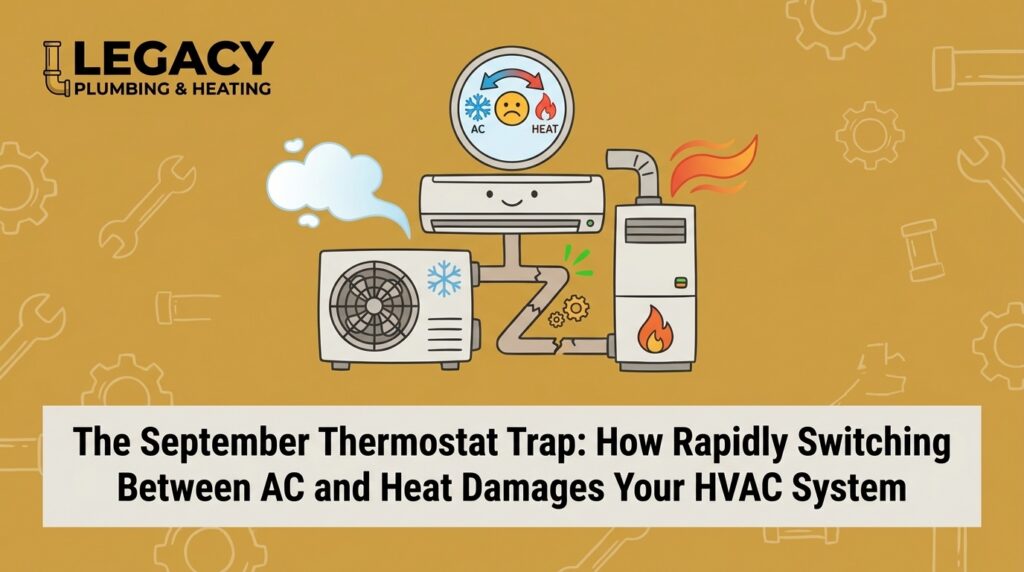
You wake up shivering, bump the thermostat to heat, and then by mid-afternoon, the house feels like an oven, prompting you to switch right back to AC—welcome to The September Thermostat Trap: How Rapidly Switching Between AC and Heat Damages Your HVAC System. It is a harsh reality most homeowners never consider until their equipment suddenly stops working. During the September shoulder season in Fargo, the weather is incredibly volatile. It is completely normal to experience 80-degree afternoons dropping to 40-degree nights in the span of just a few hours. At Legacy Plumbing & Heating, our technicians respond to numerous service calls every early fall simply because this massive temperature swing makes it incredibly tempting to constantly adjust the thermostat to chase the perfect temperature.
However, this daily tug-of-war between heating and cooling puts a tremendous amount of hidden mechanical stress on your equipment. Your HVAC system was designed to run in long, steady cycles, not to act as an instantaneous climate-control switch that flips back and forth multiple times a day. Prioritizing immediate comfort over proper system operation can lead to severe long-term damage, worn-out components, and a total system breakdown just when you need it most. If the back-and-forth has already taken a toll on your equipment, you might need professional AC repair to get things back on track. By understanding the mechanical risks of micromanaging your thermostat, you can keep your home comfortable while protecting your heating and cooling investment.
What Happens Inside Your System When You Flip the Switch
To understand why rapid switching is so harmful, you have to look at the foundational mechanics of how your system moves heat. Your air conditioner does not actually create cold air; it removes heat from your home using a chemical refrigerant. This process requires precise, highly pressurized conditions to work correctly. When you constantly change modes during the September shoulder season in Fargo, you disrupt this delicate balance of pressure.
The Pressure Cooker Effect
When your air conditioner is running, the compressor acts as a massive pump. It squeezes the refrigerant gas, raising its pressure and temperature significantly so that it can release heat outside. When the cooling cycle ends, that high pressure does not disappear instantly. The refrigerant remains tightly compressed inside the lines and coils. If you immediately switch the thermostat to heat, or if you turn the AC off and instantly back on, the compressor is forced to try and start against a literal wall of high-pressure gas.
The Danger of Compressor Lock-Out
Trying to start a compressor against unequalized pressure often results in a condition known as a “locked rotor.” The motor hums, draws a massive surge of electricity, but physically cannot spin because the pressure is too high. This causes the compressor to overheat rapidly. To protect itself, the system will trip an internal thermal overload switch, completely shutting down the unit. This is why a mandatory equalization period is required.
The Solution: Forced Equalization
Refrigerant pressures take roughly 5 to 15 minutes to equalize and settle after a cycle finishes. Modern HVAC systems and smart thermostats have built-in compressor delay timers specifically to enforce this waiting period. When you see “Waiting for Equipment” flashing on your thermostat screen, the system is actively protecting itself from a locked rotor condition. Bypassing this delay, or using an older thermostat that lacks this safety feature, forces the system to fight itself, drastically shortening the lifespan of your compressor.
Electrical Arcing and the Hidden Wear on Contactors
Beyond the mechanical strain on the compressor, rapid thermostat switching takes a severe toll on your system’s electrical components. The most vulnerable part in this scenario is the HVAC contactor. The contactor is a heavy-duty, high-voltage switch located inside your outdoor unit. When your thermostat calls for cooling, it sends a low-voltage signal to the contactor. An electromagnet pulls the contactor closed, allowing high-voltage electricity to flow into the compressor and fan motor.
Every time that switch closes, a tiny spark of electricity—known as an electrical arc—jumps across the metal contacts just before they physically touch. This is a normal part of operation. However, when you are constantly adjusting the thermostat to combat 80-degree afternoons dropping to 40-degree nights, you force the contactor to open and close far more often than it should. This rapid cycling turns a normal spark into a destructive force.
The Mechanics of Contactor Failure
Repeated electrical arcing acts like a microscopic welding torch inside your air conditioner. Over time, this intense heat causes significant damage to the metal surfaces of the contactor.
- Pitting: The heat melts tiny amounts of metal, leaving the surface rough, scarred, and uneven.
- Carbon Buildup: The arcing burns dust and debris, leaving a thick layer of black carbon soot on the contacts.
- Increased Resistance: The pitted, dirty surface makes it harder for electricity to flow smoothly, causing the switch to run dangerously hot.
| Condition | Normal Operation | Rapid Switching (Thermostat Trap) |
|---|---|---|
| Arcing Frequency | Occasional (2-3 times per hour) | Excessive (constant short-cycling) |
| Surface Wear | Smooth, even contact | Deep pitting and carbon scarring |
| Failure Risk | Low (lasts for years) | High (can stick closed or fail to open) |
When a contactor fails, it usually does so in one of two catastrophic ways. It can become so covered in carbon that electricity cannot pass through, meaning your AC simply will not turn on. Worse, the heat can cause the rough metal contacts to physically weld themselves together. When this happens, the switch is stuck closed, and your outdoor unit will run continuously until you manually flip the circuit breaker, risking total compressor burnout.
Why Your Blower Motor Bears the Brunt of the Damage
While the outdoor unit handles the heavy lifting of cooling, the indoor blower motor is the unsung hero of your entire HVAC system. This vital component is responsible for distributing both heated and cooled air throughout your home’s ductwork. Because it operates during both the AC cycle and the furnace cycle, the blower motor rarely gets a break during the unpredictable September shoulder season in Fargo.
When you constantly flip between heating and cooling, the blower motor is forced into a state of continuous operation. Electric motors generate a significant amount of heat while they run. Under normal conditions, the motor has time to cool down between cycles. When you eliminate those rest periods by rapid-switching, the motor experiences thermal overload. The internal windings get hotter and hotter, baking the protective insulation and degrading the internal bearings.
Our team at Legacy Plumbing & Heating sees the reality of blower motor strain firsthand every autumn. In one recent case, a Fargo-Moorhead homeowner’s system went down on a Sunday morning during a week of wild temperature swings. One of our technicians arrived quickly, diagnosed a completely failed blower, and installed a new one to get their climate control fully functional again. While severe breakdowns often happen during peak summer heat, the exact same continuous mechanical strain occurs in the early fall when homeowners constantly toggle between the furnace and the AC.
Symptoms of a struggling blower motor include a loud humming noise from your vents, a faint burning electrical smell, or noticeably reduced airflow coming from your registers. Ignoring these signs is a costly mistake, as severe blower motor failure often necessitates major repairs or even complete furnace replacement in Fargo. Giving your system time to rest is the only way to protect this critical component.
Can ‘Auto Changeover’ Mode Save Your System?
If you have upgraded to a smart thermostat in recent years, you have likely noticed a setting called “Auto Changeover” or simply “Auto” mode. This feature is designed specifically for shoulder seasons, allowing the thermostat to automatically decide whether to turn on the furnace or the air conditioner based on the current indoor temperature. While this sounds like the perfect solution to the thermostat trap, using it incorrectly can actually cause more harm than good.
The key to using Auto mode safely lies in understanding the concept of a “deadband.” The deadband is the mandatory temperature gap between your heating setpoint and your cooling setpoint. For example, if your cooling is set to 74 degrees and your heating is set to 68 degrees, you have a 6-degree deadband. When the house is anywhere between 69 and 73 degrees, the system rests completely.
The danger of a narrow deadband:
- Constant short-cycling: If you set your cooling to 72 and your heating to 71, the system will constantly fight itself. The AC will run to cool the house to 72, which might accidentally drop the temperature to 71, immediately triggering the furnace to turn on.
- Zero equalization time: A narrow deadband virtually guarantees that the system will switch modes without allowing the refrigerant pressures to equalize, leading to the locked rotor conditions discussed earlier.
- Wasted energy: Your system will run almost non-stop, driving up your utility bills while putting maximum wear on the contactor and blower motor.
To protect system mechanics, you must configure your Auto mode with a wide enough deadband to ensure the equipment gets adequate rest between cycles. Proper configuration turns Auto mode from a potential hazard into a valuable tool for shoulder season comfort.
Safe Strategies for Managing Early Fall Temperature Swings
Toughing it out in an uncomfortable house is not the answer, but neither is destroying your HVAC equipment. Managing the 40-degree daily temperature drops typical of our region requires a smarter approach to indoor climate control. By implementing a few safe alternatives, you can bridge the comfort gap without constantly relying on your thermostat.
- Establish a Wider Temperature Deadband: If you use Auto mode, set a minimum gap of 5 to 7 degrees between your heating and cooling setpoints. This ensures your system only activates during true temperature extremes, giving the blower motor and compressor plenty of time to rest.
- Enforce the 15-Minute Rule: If you do not have a smart thermostat and must switch modes manually, you must act as the delay timer. When you turn the AC off, wait a strict 15 minutes before turning the heat on. This allows all refrigerant pressures to equalize safely.
- Utilize Natural Ventilation and Fans: During those 80-degree afternoons dropping to 40-degree nights, don’t immediately reach for the AC. Open windows to create a cross-breeze, and turn on ceiling fans. Moving air feels cooler on your skin and can easily bridge the gap during the warmest part of the day.
- Manage Window Treatments: Use the sun to your advantage. Keep blinds closed on the south and west-facing windows during warm afternoons to block solar heat gain. Open them in the morning to let the sun naturally warm the house before the afternoon heat sets in.
Combining these daily habits with proper thermostat setbacks for Fargo winters will ensure your home stays comfortable and your equipment stays protected year-round.

Signs Your System Needs Professional Attention Before Winter
Even if you adopt better thermostat habits today, previous rapid switching may have already taken a toll on your equipment. Catching the symptoms of mechanical stress now is far better than dealing with a sudden breakdown during the first major freeze of the year. At Legacy Plumbing & Heating, we believe strongly in preventative education, empowering you to recognize these warning signs early so you can take action before minor wear turns into a major disaster.
Watch and listen for these mechanical red flags:
- Unusual clicking noises: If you hear a loud, rapid clicking or chattering sound coming from your outdoor unit when the system tries to start, your contactor is likely failing and struggling to maintain an electrical connection.
- Short-cycling behavior: If your system turns on, runs for only two or three minutes, and shuts off without reaching the temperature set on the thermostat, it is likely tripping a thermal overload switch due to overheating.
- Humming without starting: A loud hum from the outdoor unit that doesn’t result in the fan spinning usually indicates a locked rotor condition or a failed capacitor, often brought on by starting against unequalized pressure.
- Burning electrical odors: A faint burning smell coming through your vents when the system kicks on is a classic sign that the blower motor is experiencing severe thermal overload.
If you notice any of these symptoms, do not wait for the system to fail completely. Addressing these issues now can save you from a stressful, emergency AC installation or furnace replacement later in the year.
Frequently Asked Questions
How long should you wait before switching from AC to heat?
You should wait a minimum of 15 minutes before switching your thermostat from air conditioning to heating. This crucial waiting period allows the highly pressurized refrigerant inside your cooling system to equalize and settle. Failing to wait can cause the compressor to stall against a wall of pressure, leading to overheating, blown fuses, or severe mechanical damage.
Does switching from heat to cool damage the AC compressor?
Yes, rapid switching causes immediate and severe stress to the AC compressor. When you flip from heat to cool without a delay, the compressor attempts to start while the internal pressures are completely unbalanced. This creates a locked rotor condition, causing the unit to draw massive amounts of electricity, overheat rapidly, and potentially burn out the motor entirely.
Can you use AC and heat in the same day safely?
You can use both heating and cooling in the same day safely, provided you manage the transition properly. The safest method is to turn one mode off, open windows or use ceiling fans to bridge the comfort gap, and wait at least 15 to 30 minutes before engaging the opposite mode. Using a smart thermostat on Auto mode with a wide temperature gap (deadband) will handle this transition for you automatically.
What is the auto setting on a thermostat and should I use it?
The Auto changeover setting allows your smart thermostat to automatically switch between heating and cooling based on the indoor temperature. It is highly recommended for shoulder seasons, but only if you configure it correctly. You must set a “deadband”—a gap of at least 5 to 7 degrees between your heating and cooling setpoints—to ensure the system actually rests between cycles and doesn’t short-cycle itself to death.
Why does my HVAC system hum but not start after switching modes?
A humming sound without the system starting usually means the compressor or fan motor is physically stuck and unable to spin. This is frequently caused by trying to start the system against unequalized refrigerant pressure after a rapid mode switch, or it could indicate that the electrical contactor has failed due to excessive arcing. If you hear this sound, turn the system off immediately at the thermostat and call a professional to prevent further electrical damage.
Managing your comfort during the unpredictable fall season shouldn’t require sacrificing the health of your HVAC system. By understanding the mechanical limits of your equipment and utilizing smart thermostat strategies, you can enjoy a comfortable home without the constant fear of a breakdown. A clear, safe thermostat strategy for shoulder season protects your blower motor, preserves your contactors, and ensures your system is ready to perform when the deep winter freeze finally arrives.