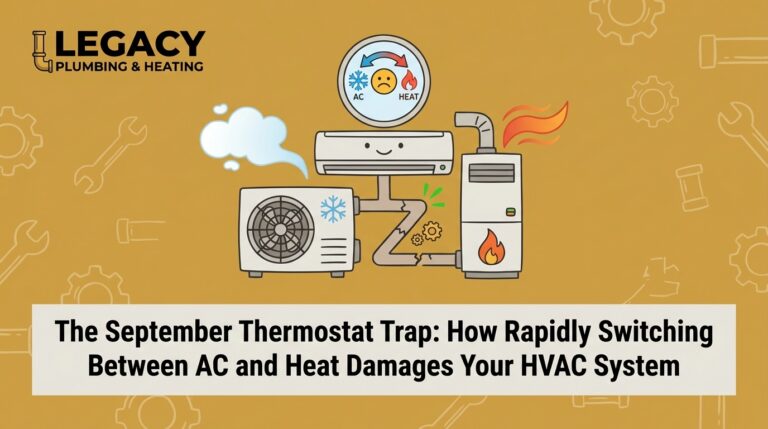
Dual fuel pairs an electric heat pump with gas heat so your system can use efficient heat-pump operation in milder weather and switch to gas when temperatures plunge.
What is dual fuel heating?
A dual-fuel system uses a heat pump as the primary heat source above a balance-point temperature, then switches to a gas furnace (or similar) below that point. Heat-pump-only setups rely on the heat pump — and sometimes electric resistance backup — all winter.
When does dual fuel make sense in Fargo-Moorhead?
Dual fuel often makes sense when you want heat-pump efficiency for shoulder seasons and cooling in summer, but still want gas heat for deep freezes common in the Red River Valley. Heat-pump-only can work in some homes with the right equipment and expectations, but winter design conditions here are demanding.
- Choose dual fuel when you already have (or want) gas heat as a reliable cold-weather backbone.
- Evaluate heat-pump-only carefully against your home’s insulation, ducts, and comfort goals.
- Do not decide from a national “average winter” chart — use local design temperatures and a real load calculation.
Failure modes to avoid
Common mistakes include setting the switchover temperature poorly, undersizing the heat pump, or assuming any heat pump will feel like a furnace on the coldest nights without backup. Another failure mode: buying efficient equipment while leaving leaky ducts untouched.
How Legacy frames the decision
Legacy Plumbing, Heating & Air treats dual fuel as a system strategy, not a buzzword. Definitions for dual fuel and heat pump live in our glossary. The right choice depends on your home, fuel access, and how you use the house — not a one-line slogan.
Next step
If you are comparing options, start with how your home heats today and what fails first on cold mornings. Review heat pump services, heating repair & service, and talk with our team about dual-fuel versus other paths.